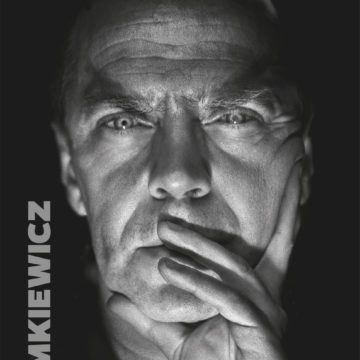
Aktualne wydanie

Powiedzieli o nas

    Jeszcze dwa – trzy numery i druk w „Kronosie” będzie nobilitacją dla każdego młodego filozofa i każdego młodego pisarza.

Jarosław Marek Rymkiewicz 

Wydawca

AhrC

Partner wydawniczy

Wydawnictwo Sic!

logo UW
Stronę zrealizowano przy pomocy środków finansowych Instytutu Filozofii UW i Dziekana Wydziału Filozofii i Socjologii
pusty

english

Kronos 2 (13)/2010

  • 28 lipca 2010

Interview with Bruce Fink by Izabela MichalskaA psychoanalyst has to speak as an oracle

  • 11 maja 2010

Lacanian theory is used to explain culture, as Žižek and Salecl do, for example. Do you think it is a key to understanding contemporary culture?
I’m very suspicious, myself, of taking concepts that were developed in the clinical setting for transformative psychotherapeutic work and trying to apply them everywhere else. People are sometimes confused: they see that Lacan talks about paintings, films, and artworks of different kinds and they think that Lacan is therefore applying his own concepts to the artworks. It’s the exact opposite—he is looking to art to inspire him to develop concepts to use in his clinical work...

Kronos 1 (12)/2010

  • 07 maja 2010

Sigmund Freud, Jacques Lacan, Bruce Fink, Dany Nobus, Paweł Dybel, Szymon Wróbel, Karol Irzykowski...

Kronos 4(11)/2009

  • 07 maja 2010

Walter Benjamin, Hannah Arendt, Avishai Margalit, Stanisław Grabski...

Kronos 3 (10)/2009

  • 19 października 2009

Alexandre Kojève, Nikolai Fyodorov, Quentin Meillassoux, Stanisław Brzozowski...

Arkadiusz Górnisiewicz Modernity and What Has Been Lost. Considerations on the Legacy of Leo Strauss:
A Summary

  • 03 sierpnia 2009

Leo StraussThe conference Modernity and What Has Been Lost. Considerations on the Legacy of Leo Strauss was held at the Jagiellonian University in Kraków on June 4-5, 2009. The conference made an attempt to identify Strauss’s intellectual background and these problems which may be found in the foreground of his thought. The repudiation of a modern idea of homogenous, universal state (considered as an illegitimate synthesis of Jerusalem and Athens, i.e., the claims of Reason and Revelation) proves to be a pivotal point of his views. The world we live in, molded by science and historical relativism, may be described as hostile to human dignity or perfection, or abhorrent to those who love search for wisdom. Straussian teaching consisted in the steady effort to reopen the quarrel between the Ancient and the Moderns, as well as it refers to esoteric way of writing practiced by the most profound thinkers of the past which has been apparently forgotten in the last three centuries... [more]

Kronos 1-2 (9)/2009

  • 18 czerwca 2009

F.W.J. Schelling, Ivan V. Kireevski, Jürgen Habermas, Jean-François Courtine, F. Scott Scribner, Alberto Toscano, August Cieszkowski...

Rafał Kuczyński Image of Man in European Culture - Ideal and Reality

  • 24 maja 2009

On 22 April 2009 two of our editing staff members: deputy editor in chief Piotr Nowak and Rafał Kuczyński participated in an International Seminar dedicated to the Polish cultural heritage of the interwar period (1918 and 1939). The seminar was organized by the Vardo-Semminar Foundation, Polska Institut and Stockholm University and gathered numerous scholars and students from Stockholm University as well as invited guests from Poland.

Aaron Tugendhaft Paradise in Perspective: Thoughts from Pavel Florensky

  • 31 stycznia 2009

Un Dieu vengeur a exaucé les voeux de cette multitude
Charles Baudelaire, Salon de 1859

In his recently published tour-de-force The Reformation of the Image, Joseph Leo Koerner discusses an early panel painting by Lucas Cranach the Elder. The painting, a crucifixion from 1503 now in Munich, is unlike any Cranach would later paint on the same subject. Cranach presents a radically oblique view of Christ that introjects a viewer into represented space, specifying one’s position “through the contingency of forms beheld as if at this specific place and time.” By manipulating point-of-view, the artist makes available the “subjective perception of an eyewitness” to the event depicted. The painting suggests a contingency involved in viewing Christ, as if one were to happen upon the scene... [more]

Kronos 4 (8)/2008

  • 27 grudnia 2008

Ernst H. Kantorowicz, Immanuel Kant, Hannah Arendt...

Kronos 3 (7)/2008

  • 21 października 2008

Carl Schmitt, Leo Strauss, Gopal Balakrishnan, Zygmunt Bauman, Krzysztof Michalski...

1968 – War of Generations. Interview with Paul Berman

  • 18 sierpnia 2008

Kronos 2 (6)/2008

  • 25 maja 2008

Plato, Seth Benardete, Leo Strauss, Roberto Calasso...

Kronos 1 (5)/2008

  • 19 lutego 2008

Friedrich Schlegel, Søren Kierkegaard, Mladen Dolar...

Kronos 4/2007

  • 20 listopada 2007

Nikolai Berdyaev, Rosa Luxemburg, Hannah Arendt, Giorgio Agamben, Marjan Massonius...

Kronos 3/2007

  • 18 sierpnia 2007

James Hillman, Maryla Falk, Rudi Visker, Edward Abramowski...

Kronos 2/2007

  • 15 maja 2007

Luigi Pareyson...

Kronos 1/2007

  • 07 stycznia 2007

Max Horkheimer, Theodor Wiesengrund Adorno, Walter Benjamin, Adam Mickiewicz...

pusty

ECLA Berlin

pusty

pusty
pusty
stopka - logo KronosInstytut Filozofii Uniwersytetu Warszawskiego, ul. Krakowskie Przedmieście 3, 00–927 Warszawa, e–mail: redakcja@kronos.org.pl